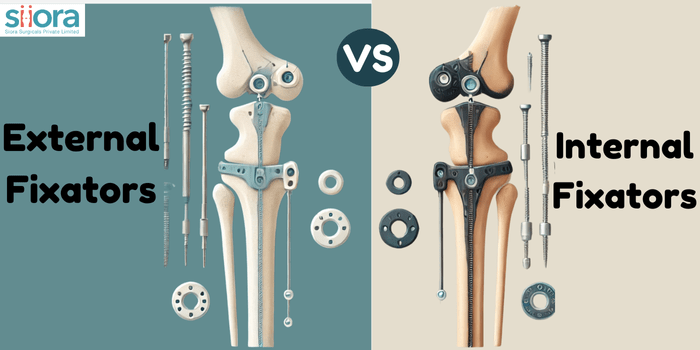
Orthopedic surgeries often involve the use of fixators to stabilize bones during the healing process. Fixators can broadly be classified into two categories: external fixators and internal fixators. Understanding their differences, applications, and benefits is crucial for both medical professionals and patients. Let’s delve into a detailed comparison of these two approaches.
What Are External Fixators?
External fixators are devices placed outside the body to stabilize fractured bones. They consist of metal rods, screws, or pins that are inserted into the bone through the skin and connected to a frame outside the body. These devices are commonly used in cases of severe fractures, open wounds, or complex injuries where internal fixation is not feasible.
Advantages of External Fixators
- Minimally Invasive: External fixators require smaller surgical incisions, reducing the risk of infection and blood loss.
- Flexibility in Adjustment: Surgeons can easily adjust the frame to ensure proper alignment during the healing process.
- Temporary Solution: They are often used as a short-term stabilization method, especially in emergency settings.
- Useful for Complicated Cases: External fixators are particularly beneficial in cases involving significant soft tissue damage, as they allow access for wound care.
Disadvantages of External Fixators
- Infection Risk: The pins or screws protruding through the skin can become infected if not properly cared for.
- Bulky Design: External fixators are visible and can be uncomfortable or cumbersome for patients.
- Limited Long-Term Stability: They are generally not intended for prolonged use.
What Are Internal Fixators?
Internal fixators are devices implanted within the body during surgery to stabilize fractured bones. Common examples include plates, screws, rods, and nails. Internal fixation is typically used for long-term stabilization, allowing the bone to heal naturally.
Advantages of Internal Fixators
- Hidden Placement: Internal fixators are concealed under the skin, making them less noticeable and more comfortable for patients.
- Durable and Stable: These devices provide robust and consistent support, promoting efficient bone healing.
- Reduced Infection Risk: Unlike external fixators, there is no external component, significantly lowering the risk of infection.
- Facilitates Rehabilitation: Internal fixators allow earlier mobilization and weight-bearing, which can speed up recovery.
Disadvantages of Internal Fixators
- Invasive Procedure: Implanting internal fixators requires open surgery, which can lead to longer recovery times and increased blood loss.
- Potential for Complications: Issues like implant rejection, hardware failure, or the need for subsequent removal surgeries can occur.
- Cost: Internal fixation surgeries tend to be more expensive than those involving external fixators.
Key Differences Between External and Internal Fixators
- Placement: External fixators are outside the body, while internal fixators are implanted inside.
- Purpose: External fixators are often temporary, while internal fixators are designed for long-term use.
- Procedure: External fixation involves minimal invasion, whereas internal fixation requires open surgery.
- Patient Comfort: Internal fixators are generally more comfortable and less restrictive than external fixators.
Choosing the Right Fixator
The choice between external and internal fixators depends on several factors, including the type and location of the fracture, the patient’s overall health, and the surgeon’s expertise. In emergency or high-risk cases, external fixators might be preferred due to their quick application and adjustability. For stable, long-term recovery, internal fixators are often the better option.
Conclusion
Both external and internal fixators have their unique strengths and limitations. External fixator systems excel in emergency or complex scenarios requiring flexibility, while internal fixators offer durability and comfort for long-term healing. A thorough discussion with an orthopedic specialist is essential to determine the most appropriate method based on individual needs.Siora Surgicals Pvt. Ltd. is a renowned manufacturer and supplier of a CE-certified range of external and internal fixators. The company has a huge distributor base in 50+ countries and is also looking to establish itself as a reliable company supplying orthopedic implants in Thailand.
 Ortho Surgical Implants